info@three6ixty.co.za
 +27 64 525 7978

The identity is approved. The launch date is close. Then the production supplier receives a small PNG logo, a rough instruction and a message that says, “Can you brand this by Friday?”
That is the moment where strong design can lose control. Not because the creative work is weak, and not because production is being difficult. The problem is usually simpler. The handover has not told the next team what is final, what is editable or what must never change. It also has not identified who has authority to approve the finished item.
A practical branding handover checklist protects the work that has already been signed off. It gives production the correct logo files, vector artwork, colour references, typography rules, permissions, proofing route and approval process before clothing, signage, print, displays or branded campaign items move into production.
For agencies, designers and internal brand teams, the goal is not to over-document every decision. It is to remove the grey areas that create last-minute back-and-forth, unofficial adaptations and avoidable sign-off delays.
What belongs in a branding handover checklist?
A branding handover checklist should include approved logo variants, supplier files, vector artwork, colour references, typography rules and brand guidelines. It should also cover permissions, editable templates, application notes, adaptation boundaries, proofing responsibilities and final sign-off authority.
The detail matters because production is not one environment. Artwork for garment branding may need a different technical conversation from artwork for large-format signage, printed material, event displays or branded campaign items. One file, one colour note or one layout instruction should not be expected to solve every application.
Three6ixty works with corporate clients and external creative teams across graphic design, printing, signage, corporate clothing, displays and other branded touchpoints. In that kind of coordinated rollout, the handover is the bridge between approved creative and practical implementation.
Separate final assets from everything else
Production should never have to guess which logo, campaign line, layout or lock-up is final. Before you send files, separate approved assets from old options, working documents and exploratory routes. If several versions have been approved for different uses, label them in plain language that makes sense outside the design team.
A file name such as “Final_logo_blue” can still leave room for doubt. “Approved primary logo, full colour, horizontal” gives the supplier a clearer instruction. Where the client has approved a specific placement, artwork treatment or campaign layout, include that context with the handover so the production team understands which decisions have already been made.
Start With the Touchpoints People See First
The first rollout question is not, “What can we brand?” It is, “What must people see correctly first?”
High-visibility items often deserve early attention because they shape the immediate impression of the business. Reception signage, building signage, vehicle branding, branch signage and event displays make the new identity public. They also expose inconsistency quickly when old and new branding appear side by side.
When signage is part of the rollout, it needs more thought than simply enlarging the logo. A reception sign, building sign, vehicle graphic or branch application must work at the right scale, in the right position and in the right context. Three6ixty’s Signage Solutions support this high-visibility part of implementation where business presentation is most exposed.
Employee-facing items matter as well. Uniforms, workwear and branded staff clothing bring the identity into daily operations. They affect how teams appear at reception, on site, at events and in customer-facing environments. When Corporate Clothing forms part of a rollout, it should be planned with the same brand control as signage, print and digital material.
Different businesses will prioritise different touchpoints. A branch-based company may begin with customer-facing signage and staff presentation. A business preparing for an exhibition may need event materials first. A sales-led team may need updated stationery, profiles and digital assets before less visible items are replaced.
Guidelines Still Need Practical Interpretation
Brand guidelines set the rules. Implementation makes them work.
Turning brand guidelines into materials involves decisions about spacing, layout, logo placement, colour use, message hierarchy and format. A letterhead is not a pull-up banner. A website banner is not a vehicle door. A branch entrance sign is not a staff shirt. Each item needs to carry the same identity without pretending every surface behaves the same way.
Printed materials are often among the first items that need attention because they move through daily communication. Stationery, brochures, company profiles, sales material and customer documents can keep an old identity alive long after a new one has been approved. Coordinating Printing Services within the wider rollout helps these pieces follow the same approved visual direction.
Digital platforms need the same attention. A website may be the first place a customer experiences the updated brand, but it can easily become disconnected if it is handled separately from physical materials. When Web Development sits inside the brand rollout conversation, the online presence can be considered alongside signage, clothing, print and event material rather than treated as a separate visual world.
A Good Rollout Does Not Replace Everything at Once
Controlled implementation is not the same as immediate replacement. Many businesses do not need, or cannot sensibly manage, a full overnight change across every branded item.
A stronger approach is to separate urgent, visible and operational touchpoints from items that can be phased in later. Some materials may need to be ready for a public launch, customer event or branch update. Others can change as stock is used, vehicles are scheduled, teams receive new clothing or digital content is refreshed.
If implementation artwork still needs to be prepared, Three6ixty’s Graphic Design Services can support asset preparation, layout development and practical rollout work. Current file requirements and specifications should still be confirmed for the specific production item before work begins.
Send logo files that production can actually use
A low-resolution PNG may be enough for a preview in an email. It is not enough to control a production rollout. Your designer to production handover should include the approved logo files in usable formats, including vector artwork where the application requires it.
Include only the logo variants that are approved for use. These may include full-colour, single-colour, reversed, horizontal, stacked or icon-only versions, depending on the brand system. Do not leave the supplier to create a missing version unless adaptation permission has been clearly agreed.
Add short usage notes where they will prevent confusion. A production partner may need to know whether a one-colour mark is approved for a garment. It may also need rules for reversed logos on dark signs or icons used without the wordmark.
Artwork for Clothing Branding may need a different setup from artwork used for print, signage or display material. The handover should define the approved brand decision, while the production specialist confirms the correct technical setup for the method and item.
Treat colour as a production decision, not a vague preference
Colour is one of the fastest places for assumptions to creep in. A brand may have Pantone colours, CMYK values, RGB values and HEX references, but those systems are not interchangeable. They serve different outputs, and the handover needs to show which references have been approved for the application in front of the supplier.
Include the confirmed primary and secondary palettes from the brand guidelines. If certain colours are approved only for digital, print, signage or campaign use, make that visible. Avoid instructions such as “match the blue” without reference values or approved sample context.
Colour behaviour can vary across material, print process, garment, display surface and lighting condition, so colour-critical work needs to be discussed during production planning and proofing. For brochures, flyers, posters and other printed material, Three6ixty’s Printing Services team can confirm the current artwork requirements for the item being produced.
Make typography and templates safe to use
Typography can look settled in a design presentation and still become messy in production. If a supplier, client team or event team needs to update names, job titles, dates, product information or venue details, the handover must say what may be edited and what must remain fixed.
Provide the approved fonts, hierarchy rules and substitution boundaries. If editable templates are part of the rollout, include the correct files and instructions for the editable fields. If the artwork must not be edited by the production supplier, state who will supply revised artwork when changes are needed.
This is especially useful for recurring items such as business cards, name badges, event banners, campaign posters, presentation templates and branded forms. Without a clear rule, small edits can slowly pull the work away from the approved identity.
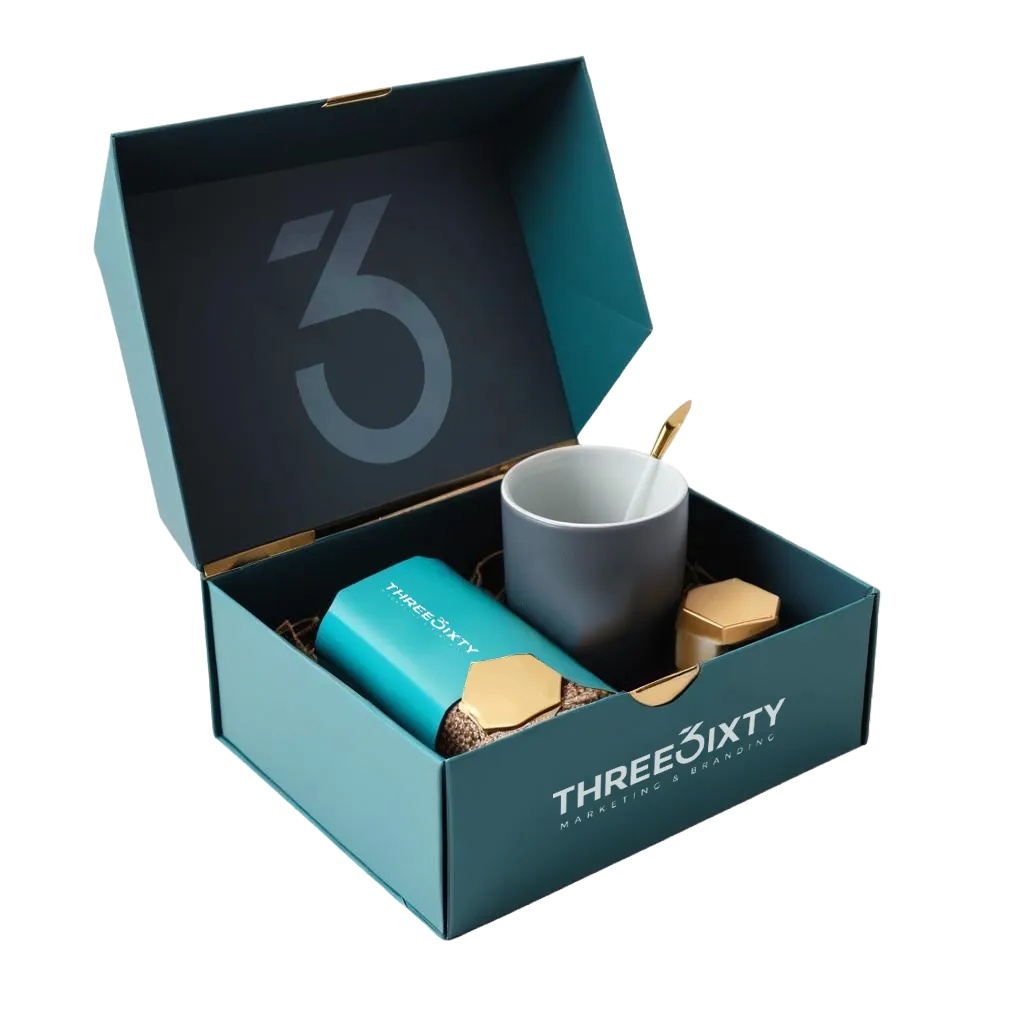
Turn brand guidelines into production instructions
Brand guidelines are most useful to production when they answer practical application questions. How small may the logo appear? How much clear space is required? Can the mark sit over a photograph? Is the slogan locked to the logo? May the logo be used vertically, cropped, simplified or separated from supporting elements?
Include the rules that protect the identity across different outputs:
- approved logo variants and when each may be used;
- minimum size rules where confirmed;
- clear space requirements;
- approved colour versions;
- background rules for light, dark, image or textured surfaces;
- prohibited applications, including stretching, recolouring, rotating or adding effects;
- rules for campaign lines, sub-brands and logo lock-ups.
These details become more important when the brand moves into physical spaces. A logo that works neatly on a PDF cover may need careful handling on a building sign, vehicle panel, exhibition wall, pull-up banner or point-of-sale display. For larger or site-based applications, Three6ixty’s Signage Solutions team can help identify what needs to be checked before production.
Plan for the applications the brand book does not cover
A brand system may be beautifully resolved for digital and print, but not yet tested across staff uniforms, giveaways, wall graphics, outdoor signage, event structures or display stands. That does not mean the design has failed. It means the handover needs a controlled route for adaptation.
If a layout needs to be simplified, a logo does not fit the available branding area, or a product has practical production constraints, the supplier needs to know who may approve the adjustment. Adaptations should be made with permission, not guessed under deadline pressure.
For events, activations and portable brand environments, include display dimensions, approved campaign visuals and any rules for adapting artwork across formats. Three6ixty’s Display Solutions can support rollout planning for banners, exhibition items and activation materials where the approved creative needs to work in a physical space.
Confirm rights, copy and supplied content before proofing
Production suppliers often receive more than logos. They may receive campaign images, staff photographs, product pictures, icons, copy, QR codes, sponsor logos or partner marks. The handover should confirm that supplied content has been approved for the intended use.
If an image, font, partner logo or campaign asset is limited to a specific event, date range, channel or format, make that limitation clear. If the production supplier is only responsible for placing supplied content, say so. If unsuitable or low-resolution content must be flagged before production, include that in the proofing route.
Small content errors become expensive once they are produced. A misspelled name on printed material, an outdated partner logo on signage or an incorrect date on an event display can delay a rollout. Content approval should sit inside the production path, not outside it.
Give proofing one clear route
Proofing is where the approved brand meets the final production item. It is also where authority needs to be clear. The supplier must know who checks artwork accuracy, who checks brand compliance, who checks content and who gives final production approval.
A strong approval process answers these questions before the first proof is sent:
- Who receives the proof?
- Who checks brand and design accuracy?
- Who checks spelling, names, dates, sizes and item details?
- Who may request changes?
- How should feedback be consolidated?
- Who has final authority to approve production?
- At what point may production proceed?
Without that structure, feedback can arrive from too many directions. One person approves the logo placement, another requests a colour change, a third sends new copy, and production is left to work out which instruction is final. A named approval owner keeps collaboration controlled.
Downloadable-style branding handover checklist
Use this production artwork checklist as a working framework before brand files move to a supplier. Adapt it for the item, production method, supplier requirements and current specifications.
- Approved assets: final logo versions, campaign artwork, icons, lock-ups and supporting graphics.
- File formats: vector artwork where required, plus approved preview or reference files.
- Logo usage: approved variants, minimum sizes, clear space, background rules and prohibited applications.
- Colour references: approved Pantone colours, CMYK, RGB, HEX or other supplied values, with intended-use notes where relevant.
- Typography: approved fonts, hierarchy rules, editable fields and substitution boundaries.
- Brand guidelines: the latest approved guideline document or the relevant extract for the rollout.
- Templates: editable files for items that may be updated, with instructions on what may and may not change.
- Application notes: item sizes, placement preferences, branding areas, production context and known limitations.
- Content approval: final copy, names, dates, product information, QR codes, images and third-party logos.
- Rights and permissions: confirmation that supplied images, fonts, partner marks and campaign assets may be used for the intended purpose.
- Adaptation permission: the person or team authorised to approve production-led changes to fit a format.
- Proofing route: proof recipient, consolidated feedback channel and checking responsibilities.
- Final sign-off: the named person or team authorised to approve production.
A simple handover flow for production control
A clean handover does not need to be complicated. It needs a controlled route from approved design to approved production.
Designer → Client Approval → Production Supplier → Proof → Final Sign-Off
Each stage carries a specific responsibility. The designer or brand team supplies the approved assets and rules. The client confirms what has been approved. The production supplier checks the practical requirements for the item. The proof shows how the approved brand will be applied. Final sign-off confirms that production may proceed.
This flow is especially useful when several touchpoints are being produced at once, such as staff clothing, signage, printed material, event displays and branded campaign items. It prevents the project from becoming a chain of informal decisions made while the deadline is already pressing.
Bring production into the handover stage
The best time to involve a production partner is not after the only available logo has been forwarded and the launch date is fixed. It is when the approved identity or campaign is ready to move from concept into rollout.
That early conversation can confirm what artwork is needed, which applications need special attention, where adaptations may be required and who must approve the final proof. It also gives agencies, internal teams and suppliers a shared view of the work before avoidable questions start costing time.
Three6ixty’s role is to help connect brand thinking with coordinated implementation across design, printing, signage, clothing, displays and other branded touchpoints. “Your Brand, One Supplier, Every Solution” works best when the handover gives every team the information needed to protect the approved work in production.
If your agency or internal design team is preparing a rollout, involve Three6ixty during the handover stage so artwork, applications, proofing responsibilities and final sign-off can be clarified before production begins.